
Food prices in Bulgaria have risen significantly over the past year. Data from market inspections show significant increases for staple foods such as tomatoes, cucumbers, eggs, dairy products and butter. In just a year, the price of 250g butter has risen from around BGN 2.26 to over BGN 6.40, while eggs and some vegetables have almost doubled in value. This makes the topic of affordable and healthy eating more relevant than ever.
According to clinical nutritionist Derya Hussain, healthy eating doesn't necessarily mean high costs. She says the key is in planning, choosing nutritious foods and limiting ultra-processed products.
„Healthy eating does not require expensive superfoods, but good habits and sensible choices,“ explains the specialist.
Among the most profitable and nutritious products remain:
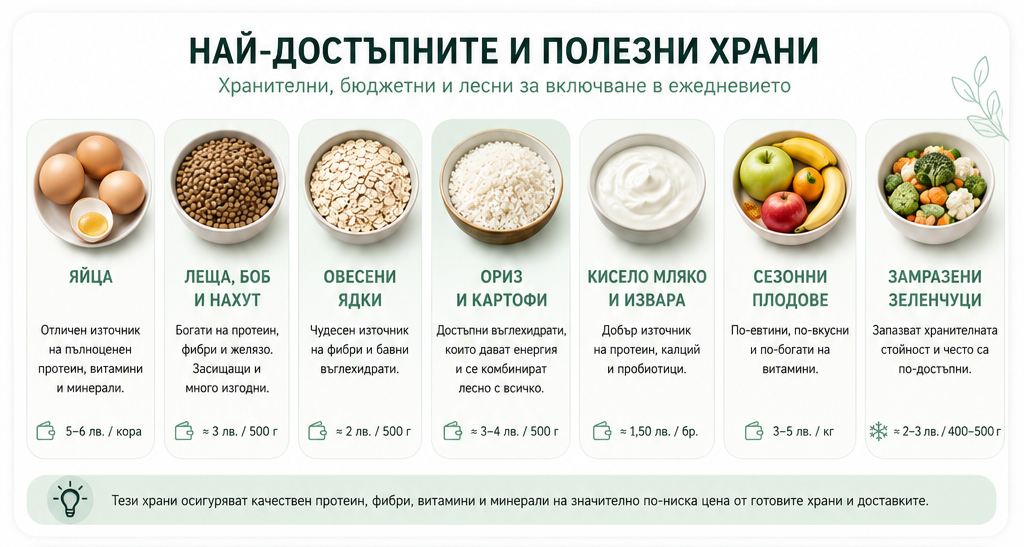
For example:
* a packet of oatmeal (500 g) costs about 2 BGN (1 €)
* eggs - about 5-6 BGN per crust (2.50 - 3 €)
* lentils (500 g) - about 3 BGN (1.50 €)
* brown rice - about 3-4 BGN (1.50 - 2 €)
* yoghurt - about 1,50 BGN (0.80 €)
* seasonal apples or bananas - between 3 and 5 BGN per kilo (1.50 - 2.50 €)
These products provide quality protein, fiber, vitamins and minerals at a significantly lower cost than prepared foods and supplies.
One of the best ways to control your budget is cooking at home. A home-made lentil stew for 5-6 servings can cost under £4 in total, while a ready-made soup or takeaway order often costs many times more.
According to Derja Hussain, pre-cooking larger quantities is a practical approach for busy people. Cooked rice, roasted vegetables, lentils or chicken can be combined into different meals during the week and this saves time and money.
Shop seasonally
Seasonal fruit and vegetables are cheaper, tastier and more nutrient-dense.
Use frozen products
Frozen vegetables and berries are often more affordable and retain their nutritional value.
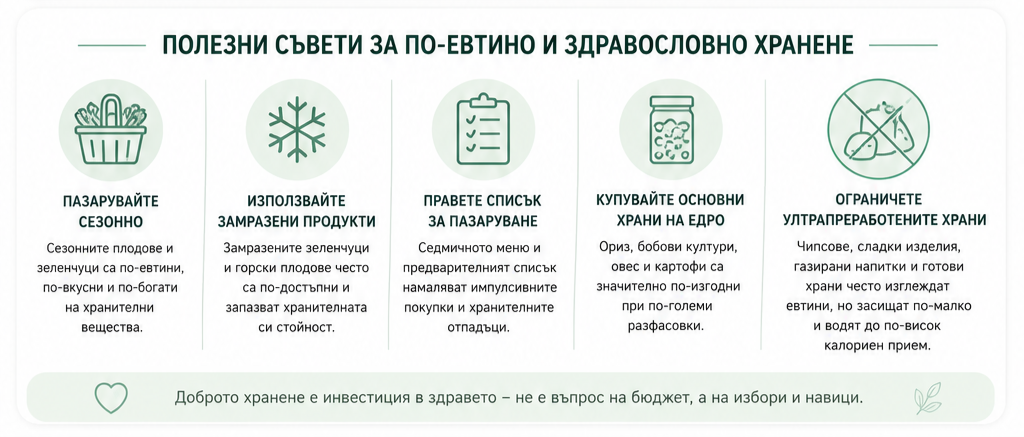
Make a shopping list
A weekly menu and pre-made list reduces impulse buys and food waste.
Buy staple foods in bulk
Rice, pulses, oats and potatoes are significantly more profitable at larger cuts.
Limit ultra-processed foods
Chips, sweets, fizzy drinks and convenience foods often look cheap, but fill you up less and lead to higher calorie intake.
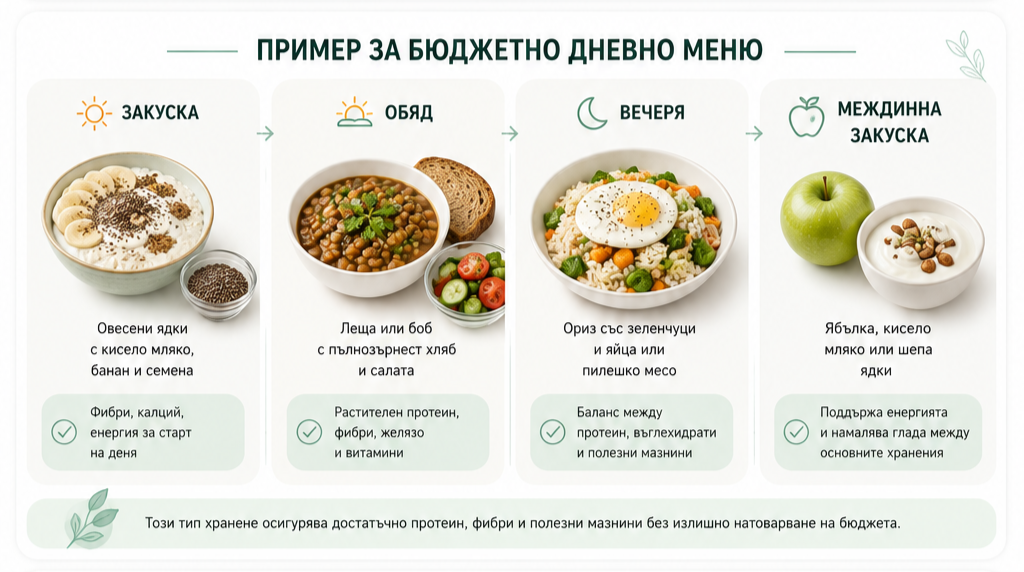
Breakfast
Oatmeal with yoghurt, banana and seeds
Lunch
Lentils or beans with wholemeal bread and salad
Dinner
Rice with vegetables and eggs or chicken
Intermediate breakfast
Apple, yoghurt or a handful of nuts
According to experts, this type of diet provides enough protein, fiber and healthy fats without unnecessary strain on the budget.
Despite rising prices, experts are adamant that good nutrition remains possible. With proper planning, home cooking and a focus on nutritious foods, one can maintain a quality diet without spending unnecessarily. In the long run, this is an investment not only in better health, but also in a lower risk of chronic disease.