
In the US, fitness influencers promote the so-called „Wolverine stack“ (BPC-157 + TB-500) for recovery and muscle growth, even though BPC-157 is labeled as „unsuitable for human use.“.
In parts of Europe, similar compounds are now available in beauty salons and fitness environments.
In the UK, the Medicines and Healthcare products Regulatory Agency (MHRA) warns that unapproved peptides are not approved for use in humans and have no evidence of safety and effectiveness, while in parallel the online black market continues to grow.
Peptides and various pharmacological „optimization“ strategies are entering the mainstream. Social networks are flooded with promises of:
Increasingly, what presents itself as a discipline and a way of life is actually supported by undeclared pharmacology.
This is no accident.
Obesity continues to rise globally despite decades of public health efforts. Access to quality nutrition is uneven, the environment is disogenizing, and long-term behavior change is difficult to sustain.
That's why people look for shortcuts.
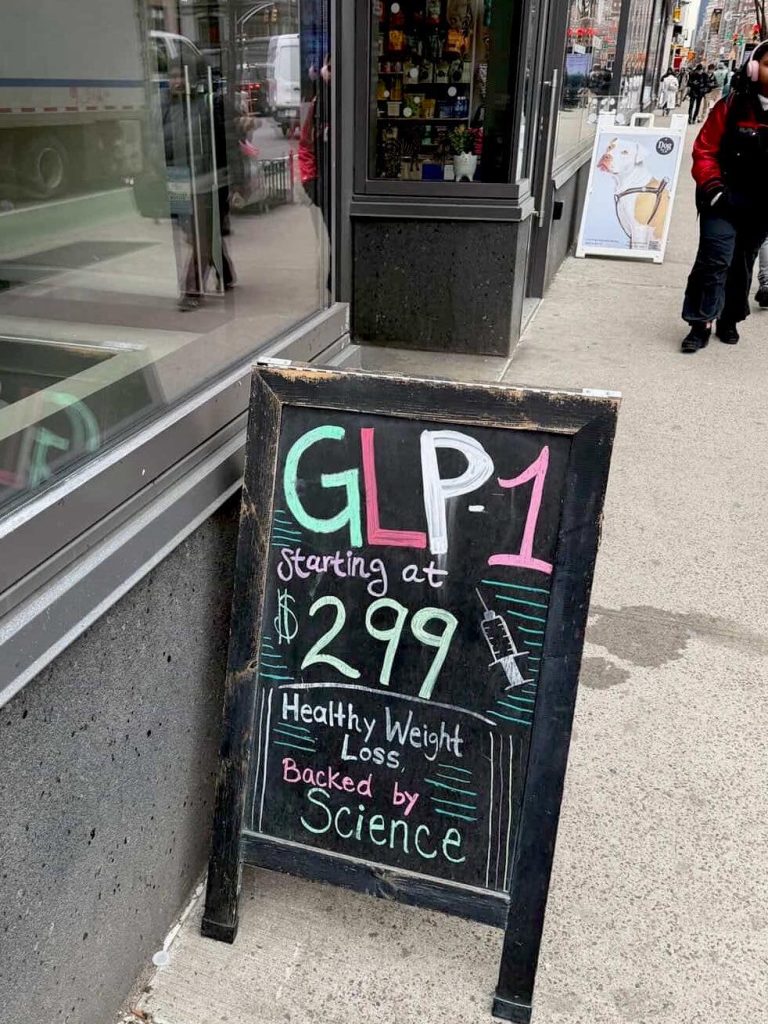
GLP-1 drugs such as semaglutide (e.g., Ozempic) have reinforced this trend - not because they don't work, but precisely because they do.
But the data show that after discontinuing therapy, a large proportion of patients regain their weight within about 1-2 years, often along with a fraction of the cardiometabolic risk.
The problem is not the drugs themselves, when clinically approved and correctly prescribed.
The problem is everything that is often left out of focus:
At a population level, risk increases when the idea that „there is a cure for everything“ is normalized without addressing the underlying causes.
Additionally, these therapies remain financially unaffordable for a significant proportion of the population, raising questions about sustainability and equitable access to treatment.
So the bigger change is emerging:
prevention → optimization → quick solutions
And if the underlying drivers of obesity are not addressed, the demand for „shortcuts“ will not abate. It will accelerate.
Pharmacological therapies, when approved and clinically studied, have their place in medical practice and can be effective in the treatment of obesity.
They should only be used after individual medical assessment by a qualified doctor.
Their unauthorized use, especially from unregulated sources, poses serious health risks and is not recommended.