
It’s not just what we eat, but also what we combine it with: how food interactions affect the absorption of nutrients
When we talk about healthy eating, we often think of individual foods: avocados are a source of unsaturated fats, tomatoes contain lycopene, and onions are rich in plant-based bioactive compounds.
But food is rarely eaten on its own.
In real life, we combine different foods in a single meal — and this matters. The composition of a meal can influence how well certain nutrients and bioactive compounds are absorbed and utilised by the body.
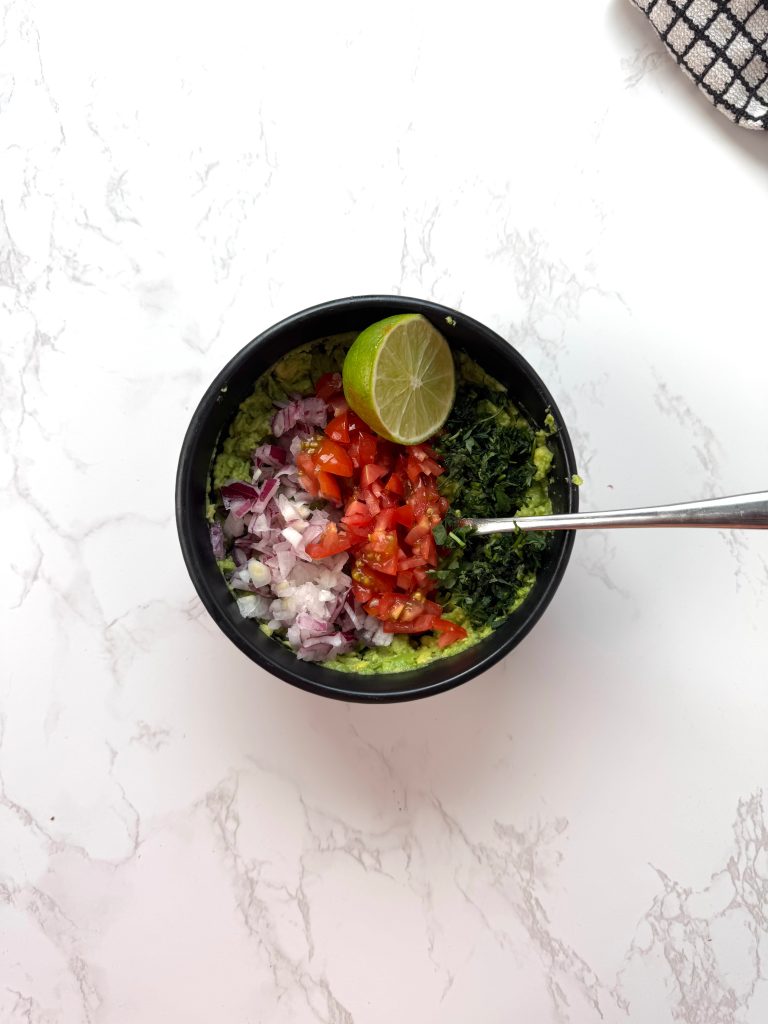
One of the best examples is the combination of avocados and tomatoes.
Tomatoes are a well-known source of lycopene — a carotenoid that gives them their characteristic red colour. Lycopene is a fat-soluble compound, which means that the presence of dietary fat can affect its bioavailability.
This is where the avocado comes in.
Avocados contain a significant amount of mainly monounsaturated fats. When combined with tomatoes, the fats in the meal can help the body absorb the carotenoids from the tomatoes.
This does not mean that avocados are „essential“ for the absorption of lycopene, nor that they are the only source of fat capable of having such an effect. Rather, it is a good example of the principle that The dietary context may influence the bioavailability of certain compounds.
In other words, it is not always necessary to add yet another supplement or „superfood“. It is enough to combine the foods that are already on our menu in a sensible way.
And what does the onion add?
The onion adds another interesting element to this combination.
It contains plant compounds such as quercetin, which belongs to the flavonoid group, as well as various sulphur compounds.
When we combine onions, tomatoes and avocados, we end up with a meal that offers a variety of:
It is important, however, to draw a distinction between the presence of a bioactive compound in food and a proven clinical effect.
The fact that a particular food contains quercetin or lycopene, for example, does not automatically mean that eating it prevents a specific disease. The effects of diet on health result from the overall dietary pattern, the quantities consumed, the frequency of consumption and the individual context.
And what about parsley? Small in quantity, but interesting in terms of its composition.
Parsley contains various bioactive plant compounds, including flavonoids and carotenoids, as well as vitamin C, vitamin K and folate. Of course, the amount of parsley we usually use in a single portion of guacamole isn’t enough for us to regard the recipe as a significant source of all these nutrients. But that is precisely what makes it interesting — different plants contribute different components to our diet.
So, in a simple bowl of guacamole, we have a combination of unsaturated fats and fibre from the avocado, carotenoids from the tomato, flavonoids and sulphur compounds from the onion, and additional plant-based bioactive compounds from the parsley.
This is just a small example of why Variety in a plant-based diet is important.
Another important term in modern nutrition is „nutritional matrix“.
Food is not simply a collection of individual nutrients. Its structure, the combination of nutrients and bioactive compounds, and the way it is processed can all influence their bioavailability.
For example, two foods may contain the same amount of a particular compound, as stated on the label, but this does not necessarily mean that the body will absorb the same amount of it.
That is precisely why we are increasingly talking not only about „What’s in the food?“, but also for „What happens to this nutrient when we consume it?“.
And that’s one of the reasons why we like simple combinations.
Perhaps the most important conclusion is that there is no need to label a particular food as a „superfood“.
Avocados aren’t a miracle food. Tomatoes aren’t a cure. Onions won’t make up for an unbalanced diet.
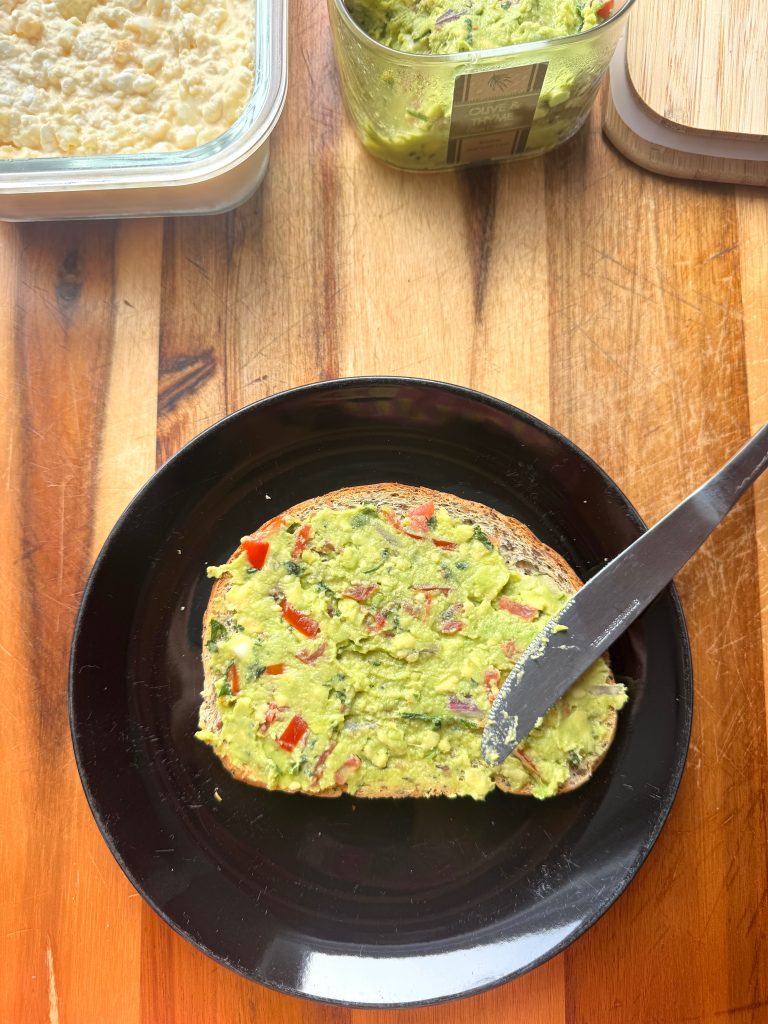
But when a variety of plant-based foods feature regularly in our diet, they can provide a range of nutrients and bioactive compounds — and sometimes the way we combine them can also affect their bioavailability.
So next time you make guacamole, don’t just think about the taste. Think about the science behind the combination, too.