

Kefir is a fermented milk drink produced through fermentation by a variety of microorganisms – including lactic acid bacteria and yeast. This is precisely what makes it an interesting addition to one’s diet, especially when it comes to a varied diet and the inclusion of fermented foods in the menu.
Consuming fermented foods as part of a varied and balanced diet can contribute to the intake of live microorganisms and other compounds formed during fermentation. Scientific evidence regarding the specific effects of kefir on the human microbiome is still emerging; therefore, it is more accurate to regard it as one of the components of a holistic dietary model, rather than as a means of ‘restoring’ or ‘cleansing’ the microbiome.
In this recipe, kefir is combined with chia, linseed, oats and blueberries – a variety of plant-based sources of fibre and bioactive compounds. This is particularly important, as different types of fibre can be utilised by different microorganisms in the large intestine.
So, rather than looking for a ‘superfood’ for gut health, we could consider diversity – a varied diet of plant-based foods, an adequate intake of fibre and the inclusion of fermented foods as part of a balanced diet.
A small, tasty step towards a more varied menu.
1 portion | ~437 kcal | ~15 g protein
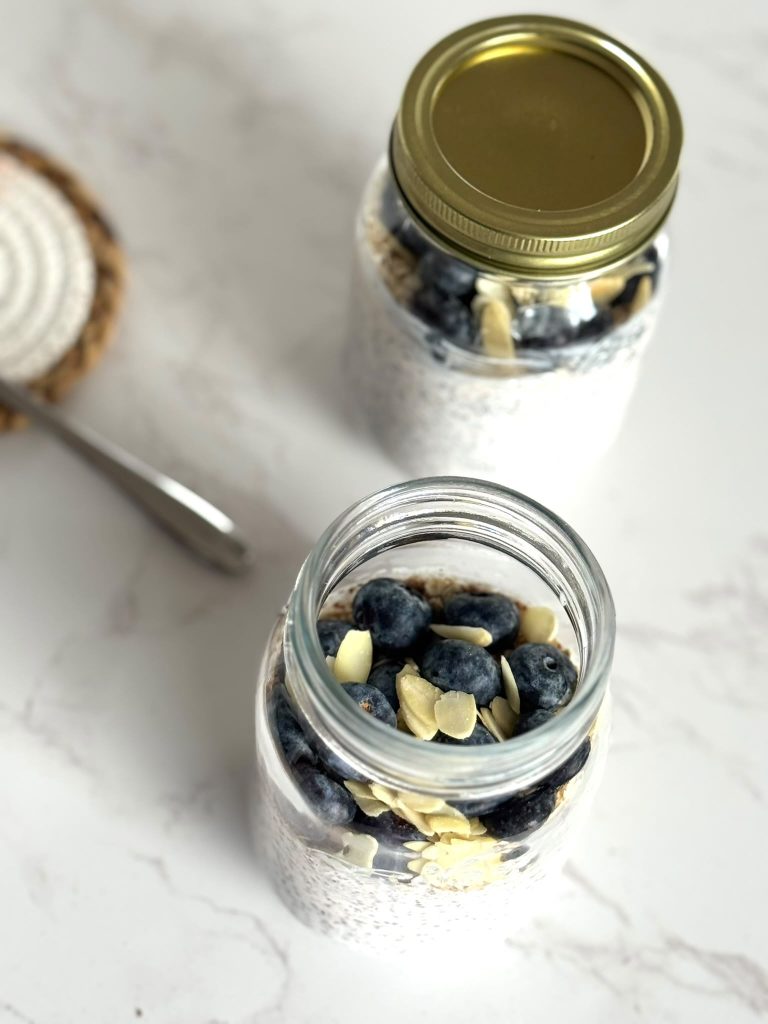
Pour the kefir into a small jar and add the chia seeds, linseeds, oats and blueberries.
Leave for 10–15 minutes, to allow the quinoa and oats to swell and the mixture to thicken. Garnish with a few fresh blueberries and serve.
As a guide:
The nutritional values for this recipe are approximate and may vary depending on the specific ingredients and quantities used.
Kefir is a fermented milk drink that contains a variety of microorganisms involved in the fermentation process. Depending on the specific product, it may also provide a significant amount of protein and calcium.
In this recipe, we combine it with several different plant-based sources of fibre – chia, linseed, oats and blueberries. Chia and linseed also provide plant-based omega-3 fatty acids ALA, whilst oats are a source of β-glucans – soluble fibre with well-documented nutritional properties.
This is a wonderful example of how we can think about the intake of nutrients that play an important role in our diet, not through a single ‘magic’ food, but through a variety of foods and food components, which complement one another as part of a balanced diet.
Flax and linseeds are small but nutrient-dense seeds. They are rich in dietary fibre, plant-based omega-3 fatty acids in the form of ALA (α-linolenic acid), as well as various minerals and bioactive plant compounds. Chia seeds are a particularly good source of calcium, magnesium and phosphorus, whilst linseed is a good source of lignans – plant polyphenols with antioxidant properties.
In this recipe, we can use them blend, rather than leaving them whole. Mechanical crushing breaks down the structure of the seeds and may facilitate access to some of their nutritional components, particularly fats and bioactive substances. In the case of linseeds, this is particularly practical, as Ground linseed usually makes the nutrients it contains more readily available than whole linseed, which can pass through the digestive tract with minimal breakdown.
And what about the bonus? We get a creamier texture, whilst both these and the linseeds contribute to the total fibre content of the recipe.